
What is a Trump Account? A new way to save for your child’s future
See how it compares to other saving options when it comes to tax benefits and long-term growth
Read, 5 minutes
Key takeaways
- You can open a Trump Account when your child is born, and kids born between 2025 and 2028 may get a $1,000 boost from the government to get started.
- Parents, family and even employers can all add money each year up to a combined contribution limit of $5,000.
- Trump Accounts are another way to save for your child, alongside options like IRAs and 529 education savings accounts.
As everyday costs continue to rise, many families are looking for simple ways to save for their children’s futures. A new federal government program aims to make that a little easier. Beginning in 2026, families can open Trump Accounts (formally known as Section 530A accounts), which provide a simple, low-cost way to start building long-term savings for children from birth to age 18. For kids born between 2025 and 2028, the government will add a $1,000 starter deposit to help kick things off. After the account is open, you (and others) can contribute up to $5,000 each year, giving the money time to grow right alongside your child. Trump Accounts aren’t a replacement for a 529 education savings account or other savings tools, so it’s important to consider how they fit with your broader financial goals, monthly expenses, income and debt.
Here are some answers to frequently asked questions about this new savings option to help you decide whether it might make sense for your family.
How can I open a Trump Account for my child?
You can open a Trump Account through the official account portal, which launched in July 2026. While some families applied when filing their 2025 taxes, anyone who didn’t can simply sign up online by completing the short application. Each eligible child can have one account, making it easy to get started.1

Who qualifies for the $1,000 seed money?
To qualify for the $1,000 starter deposit, your child must be born between January 1, 2025 and December 31, 2028, and be a U.S. citizen with a valid Social Security number.2If your child is born outside that time window, they won’t be eligible for the $1,000. But if they’re under 18, you can still open a Trump Account and make your own contributions.3
Tip: Even small, consistent deposits can add up over time—so eligibility for the starter money shouldn’t be the only factor in deciding whether to open an account.
How much can I contribute to a Trump Account?
Each year, up to a combined total of $5,000 can be contributed to your child’s account from you, family, friends, or even your employer. Bank of America, for instance, announced in early 2026 that it would match the $1,000 seed deposit for eligible employees. In some cases, contributions also may be available from charitable organizations and state and local governments (which are not subject to the $5,000 annual limit). While your income doesn’t affect your ability to contribute, other organizations—like charities—may have their own eligibility rules.4
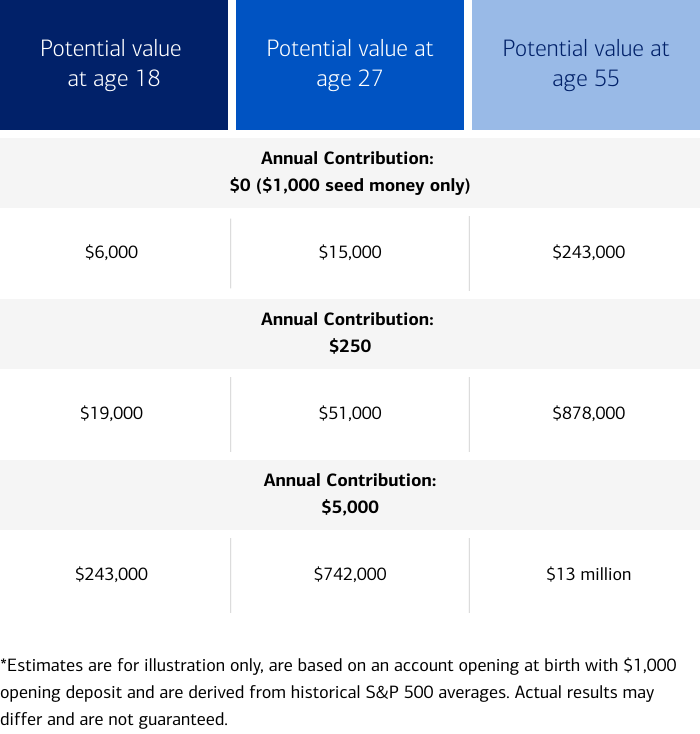
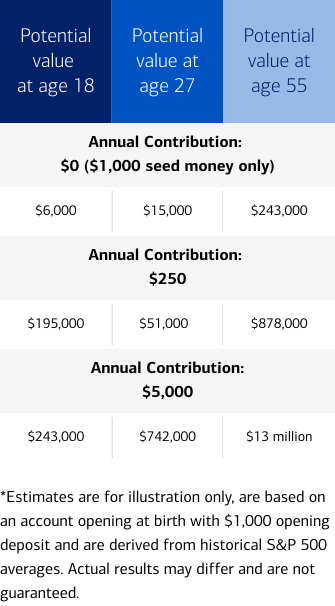
How much could a Trump Account grow?
The U.S. government’s official 530A account site offers these projections*
Are my contributions to a Trump Account tax deductible?
No, contributions are made with money you’ve already paid taxes on (unlike with a traditional IRA).5 The good news: contributions (whether from you, the government or anyone else) don’t count as taxable income for your child.
Tip: Check with your employer—they may contribute up to $2,500 without it counting as taxable income for you.6
How does a Trump Account compare with a traditional IRA?
Trump Accounts and traditional IRAs both help you save for a child’s future, but they work a little differently.
- IRAs require earned income. Traditional IRAs, which you can open as a custodial account for your child under age 18, require your child to have some earned income—from a summer job or family business, for example—and annual contributions can’t exceed that income.7
- Trump Accounts don’t require earned income. You can open one at your child’s birth or at any point before they turn age 18, giving the money more years of tax-deferred growth potential.
- Trump Accounts offer fewer choices now, more freedom later. Before age 18, Trump Account contributions are invested in a limited set of mutual funds and ETFs (with specific criteria). These limitations apply during the account’s growth period—in other words, before the child turns 18. At age 18, your child becomes the account owner and can choose from more investment options like stocks, bonds and other assets—similar to a traditional IRA.8
Tip: If you want a variety of investment choices, an IRA offers more flexibility. But if your goal is to give your children more years for their money to grow, a Trump account may have the edge.

How does a Trump Account differ from a 529 plan?
While Trump Accounts and 529 plans may sound similar, they are designed for different goals and function differently.
- A Trump Account doesn’t allow education-related withdrawals during the growth phase (from birth through December 31 of the year before your child turns 18). The only transactions allowed are qualified rollovers and corrective fixes. On January 1 of the year your child turns 18, the Trump Account starts to follow traditional IRA-style rules. That means withdrawals become possible, but they’re taxable and subject to early-withdrawal penalties.9
- A 529 plan lets you withdraw money tax-free for qualified educational expenses at almost any age—from K-12 through college.10 As the account owner, you maintain control of a 529, so if one child doesn’t need the money for education, you can change the beneficiary to another family member.
Tip: You don’t need to choose between a 529 plan and a Trump Account. You could open a 529 plan to support educational expenses and a Trump Account to give your child a head start on saving for the future.
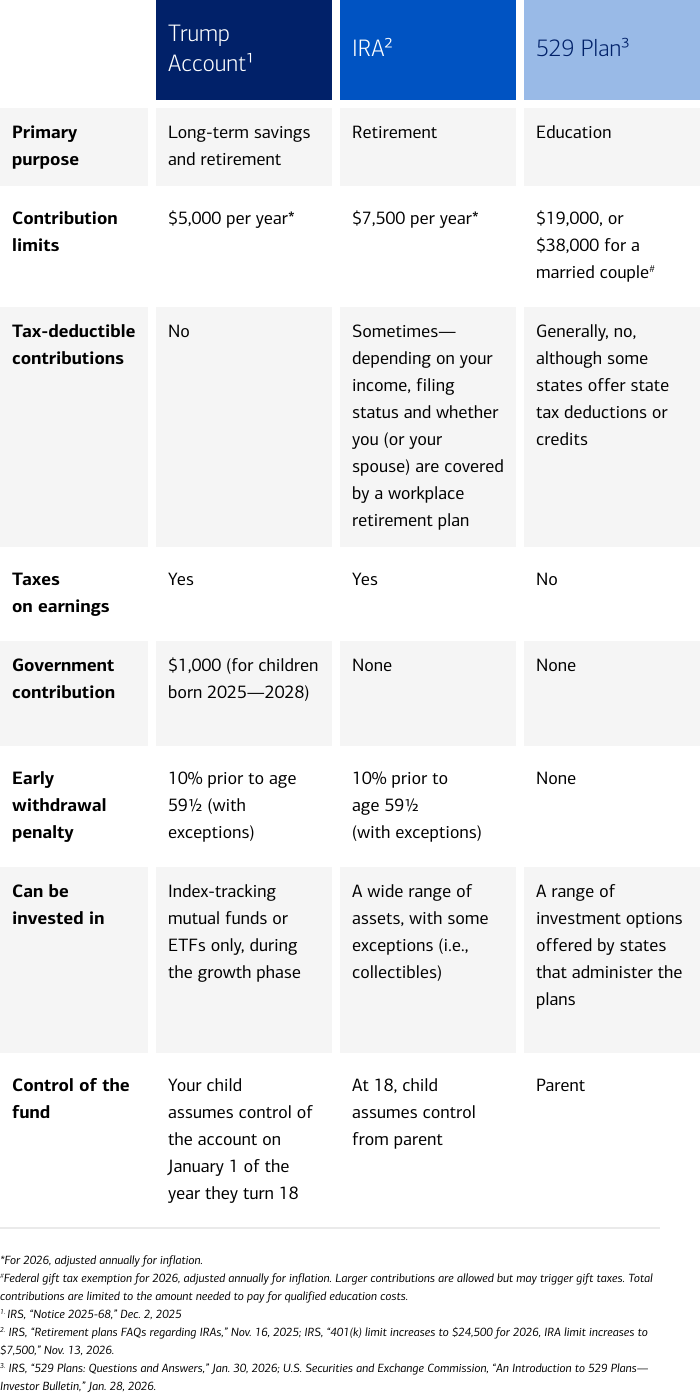
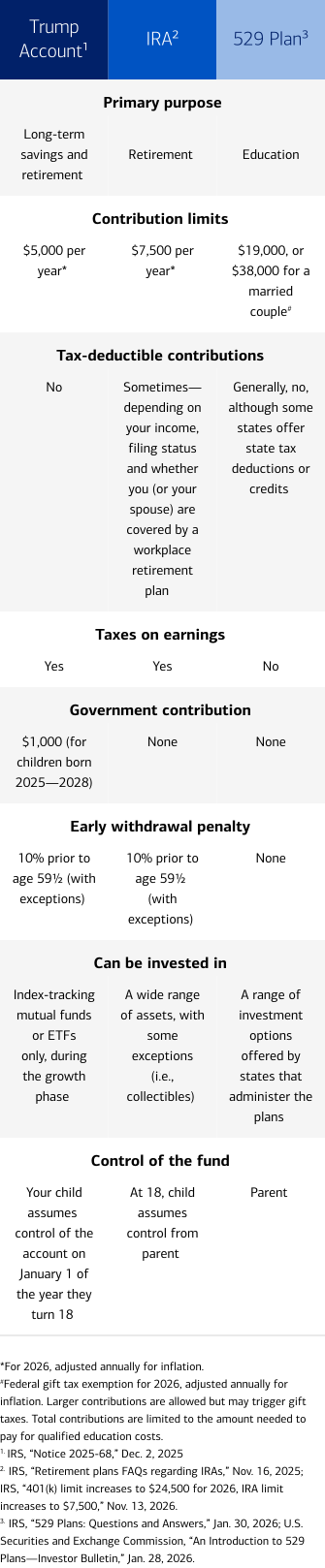
3 ways to save for your kids’ future: How they compare

When can my child access the money in a Trump Account?
Even though your child owns the account, you manage it until your child turns 18.11 After that, they take full control—similar to how custodial IRAs work. Because Trump Accounts are built for long-term saving, early withdrawals (before age 59 ½) may come with a 10% penalty, unless the money is used for certain expenses like buying a first home or paying for higher education.12
Bottom line: Should I open a Trump Account?
A Trump Account may be worth considering if you want an additional way to set aside money for your child’s future and take advantage of the potential $1,000 initial contribution available to eligible families. That said, it’s designed to work alongside existing savings tools such as 529 plans or IRAs. Consider how a Trump Account fits into your overall financial picture, including what you’re already saving, your monthly budget and more.
- Trumpaccounts.gov; IRS, “Instructions for Form 4547,” December 2025.
- IRS, “Trump Accounts,” Dec. 4, 2025.
- U.S. Department of the Treasury, “Trump Accounts: The Defining Policy of America’s 250th Anniversary,” Jan. 28, 2026.>
- IRS, "Topic no. 451, Individual retirement arrangements (IRAs),” Jan. 22, 2026.
- IRS, “Notice 2025-68,” Dec. 2, 2025.
- U.S. Department of the Treasury, “Trump Accounts: The Defining Policy of America’s 250th Anniversary,” Jan. 28, 2026.
- IRS, “Notice 2025-68,” Dec. 2, 2025.
- IRS, "Treasury, IRS issue guidance on Trump Accounts established under the Working Families Tax Cuts; notice announces upcoming regulations,” Dec. 2, 2025.
- IRS, “Notice 2025-68,” Dec. 2, 2025.
- Saving for College, “529 Qualified Expenses: What Can You Use 529 Money For?” Jan. 15, 2026.
- IRS, “Treasury, IRS issue guidance on Trump Accounts established under the Working Families Tax Cuts; notice announces upcoming regulations,” Dec. 2, 2025.
- IRS, “Notice 2025-68," Dec. 2, 2025.
- Introduction
- How can I open a Trump Account for my child?
- Who qualifies for the $1,000 seed money?
- How much can I contribute to a Trump Account?
- How much could a Trump Account grow?
- Are my contributions to a Trump Account tax deductible?
- How does a Trump Account compare with a traditional IRA?
- How does a Trump Account differ from a 529 plan?
- 3 ways to save for your kid’s future: How they compare
- When can my child access the money in a Trump Account?
- Bottom line: Should I open a Trump Account?


