How to file taxes for the first time
Read, 5 minutes
Key takeaways
- You will need to collect documents that show your income and expenses
- Information learned from doing your taxes can help with financial planning and budgeting
- Help is available from the IRS website, tax preparation software that guides you through the process, and tax professionals
Filing a federal income tax return for the first time doesn't have to be overwhelming. You’ve probably heard common tax terms—like adjusted gross income, standard deduction and tax bracket—for years, but never fully understood what they mean. We’ll walk you through tax basics and give you tips for navigating the filing process.
How do I get started on my taxes?
You may be wondering, “Where do I even begin?” Don’t worry. Most people have had that same thought. These initial steps can help you get going.
- Pull together financial documents. Best case, save and file documents throughout the year so you don’t have to scramble at tax time.
- Learn key dates. The April 15 filing deadline is well known, but it’s not the only important date.
- Decide how to prepare and file. Do you want to go the traditional route of filling out paper forms, use tax preparation software, or hire an accountant or other tax professional?
What documents do I need to do my taxes?
Gather documents that show your income for the year and support any credits and deductions you plan to claim. Many of these documents are sent directly to you, electronically or by mail, in January and February. You’ll also need various receipts and financial statements. Most documents will fall into the following categories:
Your income may come from a variety of sources. Most companies are required to submit forms to the IRS showing how much they paid you, as well as any federal, state and local taxes that were withheld. They must also send copies to you. Common forms and income sources include:
- Form W-2 for wages from your employer
- Form W-2G for lottery or gambling winnings
- Form 1099-NEC for nonemployee compensation for freelancers, independent contractors, or gig workers
- Form 1099-INT for interest income on savings and brokerage accounts
- Form 1099-DIV for dividends and capital gains distributions from investments
- Form 1099-G for unemployment compensation or other government payments
Tax credits and deductions help lower your tax liabilities or increase your refund. Credits are subtracted from the amount of tax you owe, while deductions reduce the amount of income that is subject to tax. It’s important to have documents to back up credits and deductions you claim. These could include statements and receipts on expenses for child or dependent care, education, mortgage interest, property taxes, charitable donations, student loan interest, healthcare, teaching, and retirement account contributions.
All credits and deductions come with rules and exceptions. Most have income limits that change every year. You can get details from the IRS. Your tax professional or tax preparation software can also help determine if you’re eligible for specific credits and deductions.
How do tax brackets work?
The tax system is progressive, which means tax rates increase as income increases. Congress sets the tax rates and the amount of income—called a bracket—covered by each rate. Tax rates currently range from 10% to 37%. Brackets change annually to account for inflation. Check the IRS updates page for the current brackets.
Taxes are calculated by applying each tax rate to the amount of income that falls into the corresponding bracket. The rate on the last dollar of income is called your marginal rate. It’s important to remember that the marginal rate is applied only to income that falls in that bracket. Income in the lower brackets is taxed at the lower rates. This means what you actually pay—called your effective rate—is lower than the marginal rate. You can calculate your effective federal income tax rate by dividing your total tax by your taxable income.

Quick tip
Don’t panic if it looks as though your income puts you in a higher bracket than you expected. The brackets are based on your taxable income, which is lower than your gross income because adjustments and deductions are subtracted.
Why do marginal and effective rates matter?
Doing your taxes equips you with valuable information for financial planning and budgeting. The effective federal income tax rate is important in determining how much to withhold from your paycheck or to pay in estimated taxes. The marginal federal income tax rate helps you plan for the tax impact of year-over-year changes in income. Let’s say you buy a house, for example. Deductions of mortgage interest and property taxes could reduce your income enough to put you into a lower bracket. Consult a tax professional for detailed guidance.
Should I itemize or take the standard deduction?
Most taxpayers take the standard deduction. It allows you to subtract a set amount from your income based on your filing status. As with tax brackets, the standard deduction changes every year and is usually made public by the IRS each fall. If your deductions are more than the standard deduction, it’s worth itemizing them. Deductions that can add up include mortgage interest, property taxes, high medical and dental expenses and charitable donations.

What is the best way to file my taxes?
The IRS recommends filing electronically rather than sending paper forms through the mail, as e-filing is more accurate and reliable. It typically is free, though some tax preparation software or preparers may charge a fee. If you set up direct deposit, your refund should land in your account within 21 days, often much sooner if you file early. That compares to four to six weeks in general for a paper check.
To prepare your return for filing, tax preparation software is often a good choice for first-time filers. It uses a question-and-answer format to collect your information and ensure you receive the tax breaks you’re eligible for. In the background, the software fills out relevant IRS forms and does the math. The IRS offers Free File, a partnership with tax software companies helping taxpayers prepare and electronically file their taxes at no cost. To utilize the service, you must meet certain income requirements.
If your taxes are more complex or you want more guidance, you can hire a tax professional, such as an accountant, tax attorney or enrolled agent, or go through a company that specializes in tax preparation. The IRS maintains a directory of federal return preparers and offers tips on picking one.
What are key tax dates and deadlines?
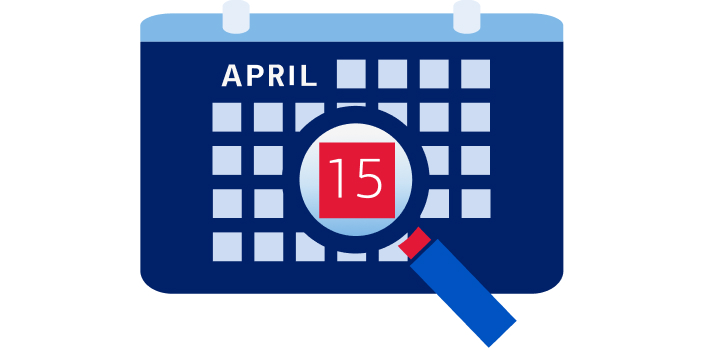
The big one is April 15. That’s the deadline for filing your federal income tax return and paying any taxes you owe. If you can’t make that deadline, you may file Form 4868 before the April 15 deadline to get an extension until Oct. 15. The extension only applies to your return. If you owe taxes, you must pay them by April 15. Not doing so could lead to penalties and interest charges that add up quickly.
If you’re self-employed, a freelancer, independent contractor or gig worker, you may need to make estimated tax payments every quarter. This is in lieu of having an employer who withholds taxes from your paycheck. Deadlines for those payments are April 15, June 15, September 15 and January 15 of the following year.
What if I can’t pay my taxes?
Most taxpayers qualify for IRS payment plans, which can be set up online. Keep in mind that penalties and interest continue to accrue while you’re on a payment plan, so it’s best to pay your taxes as fast as you can. Under the most common plan, called the simple payment plan, you can arrange for up to 10 years to pay your tax bill in monthly installments. To qualify, your debt can be no more than $50,000 in combined tax, penalties and interest.
Frequently asked questions
Even if you have multiple jobs in a year, you file a single tax return. Make sure you report income from all jobs on the return. You may need to take steps to avoid penalties for underpaying taxes throughout the year. If a substantial portion of your income is from freelance or gig work, you may need to make estimated tax payments. If you work as an employee and do gig work on the side, you may be able to avoid estimated payments by withholding more from your employee paycheck.
- Introduction
- How do I get started on my taxes?
- What documents do I need to do my taxes?
- How do tax brackets work?
- Why do marginal and effective rates matter?
- Should I itemize or take the standard deduction?
- What is the best way to file my taxes?
- What are key tax dates and deadlines?
- What if I can’t pay my taxes?
- Frequently asked questions